Brazil Import Tax Reform Explained
General Context
Brazil is replacing a complex group of consumption taxes with a simpler and more transparent model known as the Dual VAT.
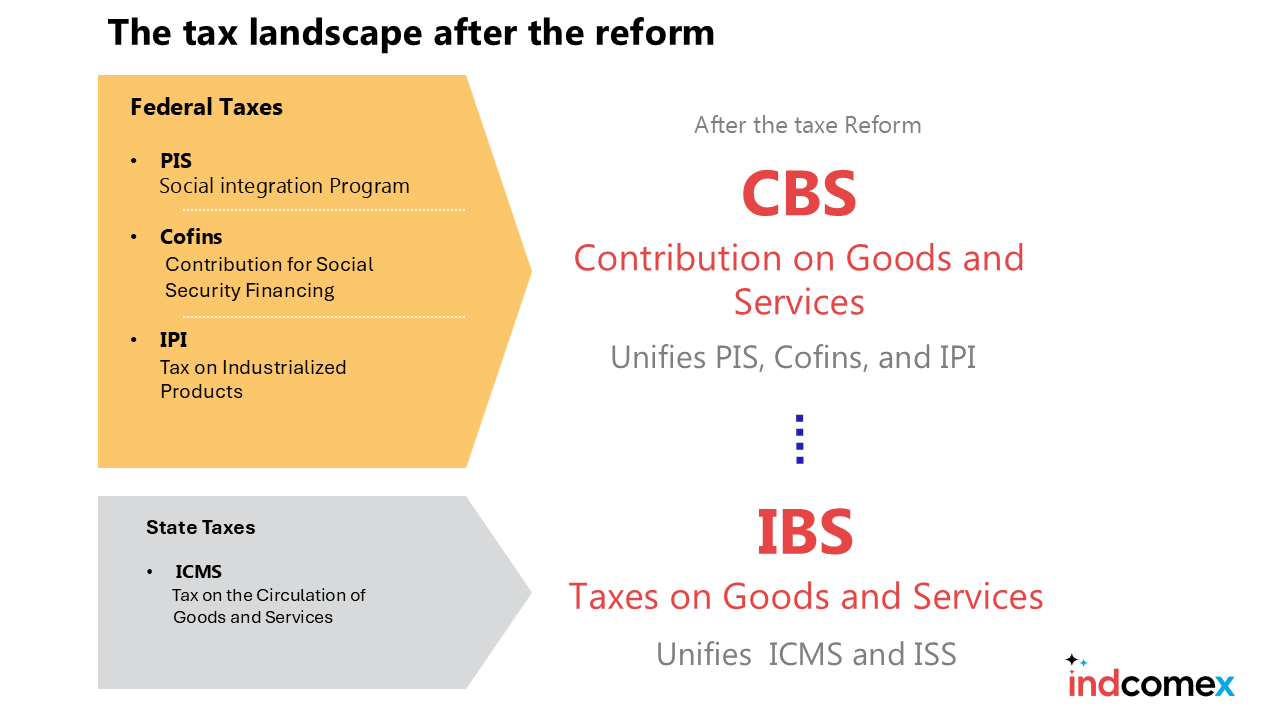
Today the system includes PIS Cofins IPI ICMS and ISS.
These will be replaced by two taxes
IBS Tax on Goods and Services managed by states and municipalities
CBS Contribution on Goods and Services managed by the federal government
The intention is to reduce confusion, standardize rules and make taxation easier to understand for companies that buy, sell or import.
The country is moving toward a national style VAT with two coordinated components.
Main Objectives of the Reform
Simplify the system by eliminating five taxes and creating two
Make taxes more neutral and avoid interference with economic decisions
Increase transparency with external price calculation
Provide legal predictability and national standardization
What Are IBS CBS and the Selective Tax
IBS will be the unified state and municipal consumption tax replacing ICMS and ISS
CBS will replace PIS and Cofins with full credit and full non cumulative rules
A Selective Tax will also apply to products that harm health or the environment
Timeline from 2026 to 2033
2026 testing year
CBS will be 0.9% and IBS 0.1% only to run the systems without increasing tax burden
2027 and 2028 adjustment years
End of PIS and Cofins
CBS starts with full rate
IPI becomes almost zero outside the Manaus Free Zone and the Selective Tax begins
2029 to 2032 transition
ICMS and ISS fall gradually
The participation of IBS increases as the model matures
2033 full model
ICMS and ISS are extinguished
IBS and CBS become the only consumption taxes in Brazil
Estimated Rates of the New VAT
Government projections indicate
CBS close to 8.8%
IBS close to 17.7%
Total VAT around 26.5% to 28%
Some essential sectors will have reduced rates
For Chinese readers it is reasonable to consider a base VAT of about 27% with lower rates for essential goods
Main Advantages of the Reform
Brazilian and foreign companies including Chinese suppliers will benefit from several improvements
Fewer taxes to understand
Broader and recoverable financial credits
Greater predictability of costs
End of the tax competition between states
Clearer rules and unified calculation across the country
How Importation Works Under the New Model
II import duty remains the same
IPI almost disappears for products without local production incentives
IBS and CBS will apply to all imported goods
The new tax base includes
customs value
freight
insurance
II
fees
Selective Tax if applicable
The calculation is external which avoids tax on top of tax
Clearance at customs may appear more expensive at the moment of importation but credits throughout the supply chain tend to compensate part of the impact
If you want to know the exact effect on your product our import calculator is already prepared to simulate both the current and the new model side by side. Click here to use it
End of the Fiscal War and New Logistics Logic
Without ICMS at origin states no longer compete by offering incentives
Port and distribution center choices will reflect real logistics efficiency rather than state discounts
The country moves closer to international practice and offers more predictability
How to Prepare Now
Map your product NCM correctly
Simulate new scenarios with IBS and CBS
Adjust fiscal and commercial systems
Review logistics operations
Follow the complementary laws under discussion
If you need to check the NCM of a product IndComex offers an advanced search with chapters breakdown and tax rates. Click here to access the NCM list
Conclusion
The Tax Reform changes prices logistics importation and the general functioning of consumption in Brazil. It is a long transition but necessary to reduce complexity and strengthen competitiveness.
If you want to understand the exact impact on your product your import process or your business operation we offer specialized consulting and personalized analysis.
Related Blog